
REVIEW · WORKSHOPS
Kiteboarding Lessons in Punta Cana
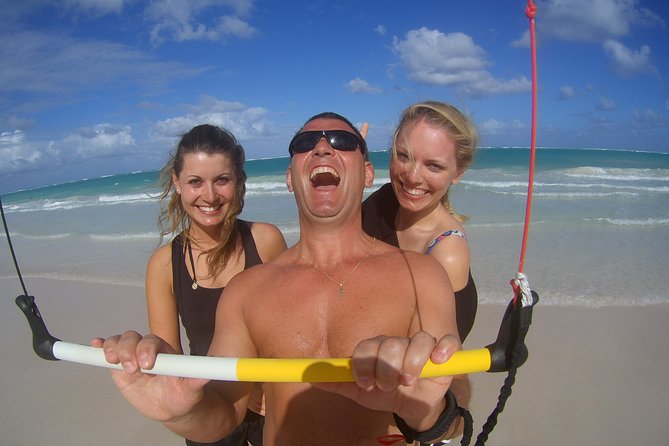
Kiteboarding in Punta Cana gets real fast. This 1-, 2-, or 3-day course is interesting because you get small-group coaching and a step-by-step progression that starts with wind theory and moves into real riding. I also like that the daily sessions are long enough to actually practice, not just watch. One drawback to plan for: food and drinks aren’t included, and hotel pickup only applies if you selected that option.
I like how the instruction is built around communication and corrections. In past sessions with instructors including Humberto (plus support from teachers like Marino, Nelson, Felix, and Cuco), you’ll hear precise feedback and keep working on the same skills until they click.
You should also be ready for the reality of wind sports. The lessons run in good conditions, and they operate in all weather, so dressing for the day matters, and you’ll want a moderate fitness level to handle several hours of beach work and water time.
Key Things That Make This Kite Course Worth It
- Small group limit (up to 4 people) keeps your learning personal, not generic.
- Daily 3-hour lessons gives enough time to practice each new step.
- Day 1 is wind fundamentals plus trainer kite control, so you don’t guess.
- Day 2 moves to full-sized kite skills, including water relaunch and downwind body dragging.
- Day 3 targets upwind recovery and first waterstarts, for real progression.
- Coaching style includes hands-on demos and in-the-moment corrections, often via radio.
A few more Punta Cana experiences for the open days
- Group Surf Lessons Punta Cana – Fun, Easy & Beginner-Friendly★ 4.5 · 121 reviews
- Chocolate Master Class & Taino Concept Store★ 5.0 · 43 reviews
- Kiteboarding Lessons in Punta Cana★ 5.0 · 32 reviews
- Punta Cana: Saona Island VIP 4 first-class beach and sunset★ 4.0 · 30 reviews
Why Punta Cana Works for Kiteboarding Lessons
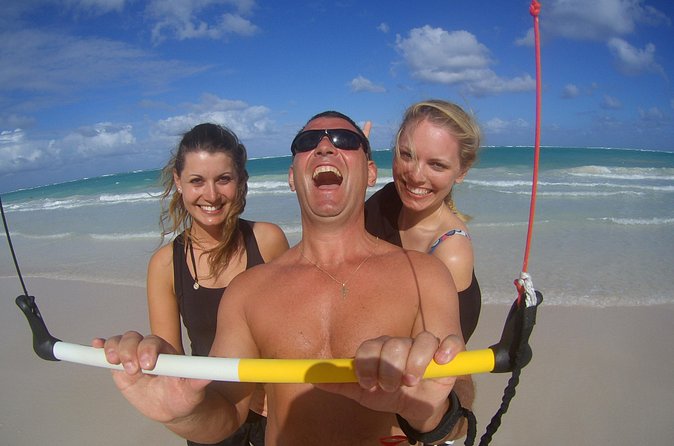
Punta Cana is a kiteboarding hotspot for a reason: you’re learning a sport that lives and dies by wind, and this area consistently gives the kind of conditions kite schools like to teach in. The water can be calm enough for early skills, and many schools here are set up to keep you on the beach when conditions are right.
What I really like for learners is the mix of practical sites. Some sessions are described around Bavaro, where the wind can be steady and waves are minimal, and other sessions can run at learning-friendly areas like spots near Pearl Beach Club where the water can be shallow for training. That shallow, flatter setup matters because you spend less time fighting waves and more time learning kite control and body position.
And when wind needs a change, the teaching team has a habit of looking for better conditions. You might hear about trips to Las Salinas or the Las Salinas-Dunas de Bani area when the wind isn’t behaving where you started.
The Academy Setup: Meeting Point, Safety Briefing, and Gear
This isn’t a sit-and-wait experience. You’ll make your own way to the Kitesurf Academy in Punta Cana, meet your instructor, and then get suited up before you hit the sand and water.
Plan on a safety briefing at the start. In wind sports, the safety talk isn’t a formality. It’s how you learn what to do when you feel the kite pull, how to position yourself, and how to keep the session controlled while you build confidence.
A helmet is included, which is a big deal for beginners. Some schools also use radios for coaching. In other words, you can get corrections without the instructor having to yell across the beach, which helps you fix the problem faster.
Two practical notes to watch: food and drinks aren’t included, and hotel pickup and drop-off are only included if you chose that option. If you’re traveling light, factor in time to get to the academy and grab water and snacks on your own.
Day 1: Wind Theory, Wind Window, and Trainer Kite Control
Day 1 is where your brain gets the rules. You start with wind theory and the wind window, then you learn the equipment so it makes sense before you go full send. That’s exactly the kind of order that helps you avoid fear. Instead of thinking you’re “doing it wrong,” you can understand what your kite is doing and why.
Then you get hands-on. You’ll use a trainer kite first, which is basically the practice version that helps you learn control without the same intensity as a full-sized kite. You’ll practice piloting and steering with one hand, which sounds small, but it forces your body to learn coordination.
Here’s what to focus on in your head: keep your eyes on the kite’s position in relation to you, and listen for the cue that tells you you’re doing it safely. On day 1, progress can feel slow, but you’re building the foundation that makes days 2 and 3 actually possible.
If you’re anxious, this is the day to be patient with yourself. Beginner kiteboarding success is mostly about controlling inputs, not about jumping.
Day 2: Full-Sized Kite Control, Water Relaunch, and Downwind Drags
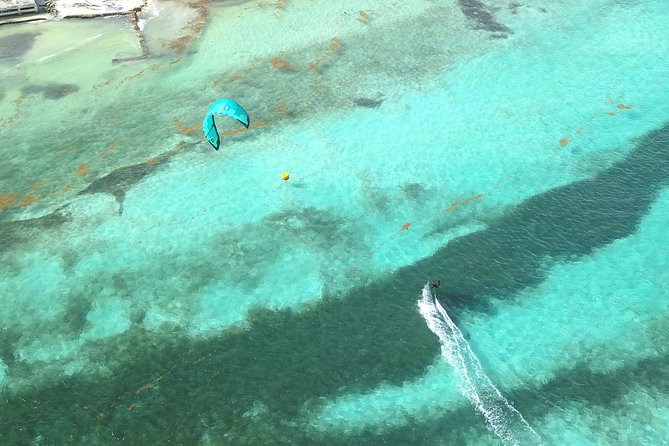
Day 2 is when the sport stops being mostly about control on land and becomes about control while you’re in motion. You switch to a full-sized kite and practice managing it in the water.
The key skills listed here are water relaunch and downwind body dragging. Water relaunch is the ability to get the kite back into a usable position after you’ve fallen or lost tension. It’s not glamorous, but it’s what keeps your session from turning into a long walk back to the starting point.
Downwind body dragging is also about momentum and positioning. You’re learning how the kite pulls you, how to keep your body aligned with the kite’s power, and how to move without needing perfect balance right away.
Many learners describe day 2 as the first real “zip across the water” moment. That lines up with what the curriculum targets: once you can relaunch and keep the kite stable, the water becomes a place to work, not a punishment.
If you only have a short vacation, this is the sweet spot day for most people who want more than a taste of the sport.




Day 3: Upwind Bodydragging, Riding Both Ways, and First Waterstarts
Day 3 is where your skills start turning into independence. You work on upwind bodydragging techniques, which are used to recover the board, plus riding in both directions.
The session also targets your first waterstarts. That’s a major milestone because it’s where you move from “I can manage the kite” to “I can actually start riding.”
Upwind recovery matters because it reduces the downtime between attempts. Instead of waiting and resetting, you learn to use body dragging to regain position and keep practicing.
Also, riding in both directions gives you a more complete feel for the board. Kiteboarding isn’t just one stance and one direction. The faster you learn both, the faster you’ll progress once you’re back home.
If you’re choosing between 1, 2, and 3 days, day 3 is for you if you want a real progression story, not just a first-weekend memory.
Coaching Style: Humberto, Radio Feedback, and Corrections That Stick
One reason this experience gets strong praise is the teaching approach. Humberto is repeatedly described as an excellent teacher with a way of explaining that feels comfortable and clear, not intimidating. And the school’s team is varied, with instructors like Marino, Nelson, Felix, and Cuco showing up in past sessions.
What I’d watch for, as you learn, is how often corrections happen during the session. One description mentions radio-based feedback and corrections throughout the lesson. When you can hear your adjustments immediately, you can test them right away rather than waiting until the end.
There’s also mention of drone video support in at least one account. Even if you don’t get video every time, the point still matters: feedback gets visual. You can see your body position and kite angle, then connect it to what you felt in the water.
Finally, the sport is technical, so patience matters. Past experiences highlight that beginners are taken seriously and taught systematically, including safety-first habits. That’s what makes the fear factor shrink.
Choosing 1, 2, or 3 Days for Your Goals
The curriculum is designed to stack skills day by day, so your choice depends on what you want from your vacation.
If you book 1 day, aim for a strong kickoff. You’ll learn wind theory, the wind window, and trainer kite basics, plus you’ll get a feel for safety and how the equipment behaves. This is great if you’re curious but short on time.
Book 2 days if you want real progress. You’ll move from trainer kite work into full-sized control and learn water relaunch plus downwind body dragging. This is often where learners start feeling like they’re actually kiteboarding, not just training.
Choose 3 days if your goal is waterstarts and riding both directions. Day 3 focuses on upwind recovery and more complex maneuvers, which is exactly what turns skill from theory into repeatable motion.
For families or mixed skill groups, the small group size matters. With a maximum of four, you’re less likely to feel lost while the others go off to learn something else.
Where You’ll Ride: Shallow Learning Spots and Wind-Ready Alternatives
You’re based in Punta Cana, but the exact water conditions can vary, and the teaching team clearly cares about matching skill level to conditions. Some accounts describe learning at calm, shallow areas where knee-deep water makes early practice easier.
Another set of notes points to Bavaro spots with consistent wind and almost no waves, which is ideal for beginners learning to control the kite without constantly fighting chop.
When conditions are not what you hoped for, there’s evidence the school can adjust to better winds, including trips to Las Salinas and Las Salinas-Dunas de Bani. That matters because kiteboarding lessons are only as good as the conditions you get to practice in.
So your best strategy is to stay flexible with your expectations. If you’re chasing a specific “perfect beach,” you might miss the point. The goal is consistent practice time under workable wind and water conditions.
Price and Value: Is $215.39 Reasonable?
At $215.39 per person, this isn’t cheap, but it’s also not just buying a generic activity ticket. You’re paying for expert instruction, a small group format, and multiple hours of real practice across your selected option (1, 2, or 3 days).
The value gets better if you can protect your practice time. Since you’re in the water learning technical skills, each day matters. Two 3-hour sessions can beat one long day, because your brain has time to stabilize between lessons and then apply what you learned.
What’s included is straightforward: a professional guide and a helmet. Food and drinks are not included, so you’ll want to plan meals or snacks around the lesson day.
Hotel pickup is also not automatically included unless you chose it. If you’re staying far from the academy, the “cheaper-looking” logistics can cost you time and energy, so build that into your day.
My take: for beginners, the small group and instructor time are the main value drivers. Kiteboarding is hard to learn solo, and having someone correct your kite control and body position reduces wasted attempts.
Practical Tips to Make Your Lessons Easier
Here’s how to set yourself up for a smoother day, using what the program emphasizes.
First, respect the safety briefing. It’s not optional, and it’s not just paperwork. Kiteboarding has real power, and the point of those rules is to keep your session productive.
Second, dress for the day and the wind. The program runs in all weather conditions, so you don’t want to show up underprepared and then spend the lesson uncomfortable.
Third, bring your own food and drinks plans. Since those aren’t included, you’ll feel better and you’ll perform better if you don’t wait until you’re starving.
Fourth, expect a moderate physical demand. You’ll likely do repeated beach-and-water effort, and you’ll move your body into positions you’re not used to yet.
Finally, take correction seriously when it comes. Whether it’s through direct instructions or radio feedback, make the change, then test it immediately. That’s the fastest way to turn “I think I’m doing it” into “I can do it.”
Should You Book Kiteboarding Lessons in Punta Cana?
I’d book this if you want real skill growth in a short time, and you like the idea of learning from instructors who focus on clear instruction and corrections. The small group of four helps a lot, and the 1-2-3 day progression is built to move you from wind theory into water relaunch, then upwind recovery, then first waterstarts.
Skip it, or at least reconsider your timing, if you’re expecting a laid-back beach activity with no effort. This is work, especially for day 2 and day 3, and you need the moderate fitness level to enjoy it.
If your schedule allows it, I’d lean toward 2 or 3 days. One day can be a great introduction, but the biggest leaps happen once you move past trainer kite control and start learning the skills that keep you on the water.
In short: if you’re ready to learn a technical sport with coaching that takes safety and progress seriously, Punta Cana is a smart place to start, and this course is a solid way to get your wind-powered basics fast.
FAQ
Where do I meet for the kiteboarding lessons?
You meet at the Kitesurf Academy in Punta Cana. The listed start location is La Altagracia Province, Dominican Republic, and you’ll make your own way to the academy.
Do I need prior kiteboarding experience?
No experience is necessary. The lessons are available for complete beginners and also for more experienced kiteboarders.
How long is the class each day?
Each option includes a daily 3-hour lesson.
How many people are in the group?
The experience has a maximum of 4 travelers.
What’s included in the price?
Included items are a professional guide and use of a helmet.
Is hotel pickup and drop-off included?
Hotel pickup and drop-off are not included unless you selected that option.
Are food and drinks provided?
No. Food and drinks are not included.
Do the lessons run in bad weather?
The activity operates in all weather conditions, but it also requires good weather. If it’s canceled due to poor weather, you’ll be offered a different date or a full refund.
What fitness level do I need?
You should have a moderate physical fitness level.
More Workshops in Punta Cana
- Group Surf Lessons Punta Cana – Fun, Easy & Beginner-Friendly
★ 4.5 · 121 reviews - Chocolate Master Class & Taino Concept Store
★ 5.0 · 43 reviews - Punta Cana: Saona Island VIP 4 first-class beach and sunset
★ 4.0 · 30 reviews - Punta Cana: One-on-One Surf Lesson on Macao Beach
★ 4.6 · 26 reviews - Full-Day Surf Camp in Punta Cana –Lessons, Beach Time & Adventure
★ 5.0 · 12 reviews
More Tour Reviews in Punta Cana
- Private Airport Punta Cana to La Romana Bayahibe or Casa de Campo Resort Area
★ 5.0 · 6,662 reviews - Punta Cana Zipline Adventure with Buggies and Horseback Riding
★ 5.0 · 5,001 reviews - Full-Day Santo Domingo City Tour from Punta Cana
★ 4.5 · 4,500 reviews - Punta Cana: Catamaran Boat to Saona Island with Buffet Lunch
★ 4.4 · 3,822 reviews - Punta Cana Dune Buggy Adventure and Amazing Water Cave
★ 4.5 · 3,411 reviews
Keep the Caribbean days coming





Workshops, side by side.
 ★ 4.5Group Surf Lessons Punta Cana – Fun, Easy & Beginner-FriendlyFrom $115121 reviews
 ★ 5.0Chocolate Master Class & Taino Concept StoreFrom $5743 reviews
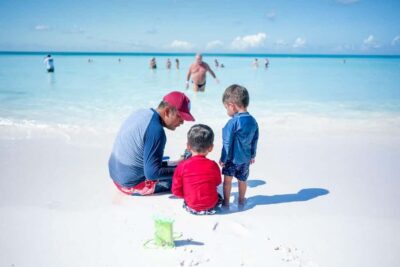 ★ 4.0Saona Island VIP 4 first-class beach and sunsetFrom $12530 reviews
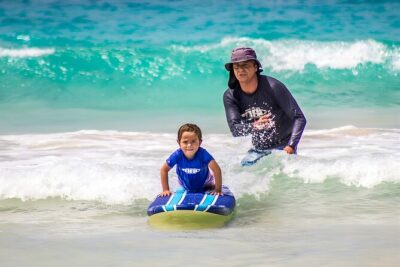 ★ 5.0Private Surf Lesson Punta Cana – 1-on-1 Coaching for All LevelsFrom $14027 reviews
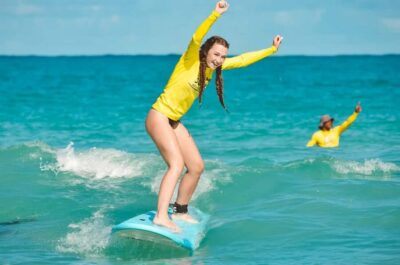 ★ 4.6One-on-One Surf Lesson on Macao BeachFrom $11526 reviews
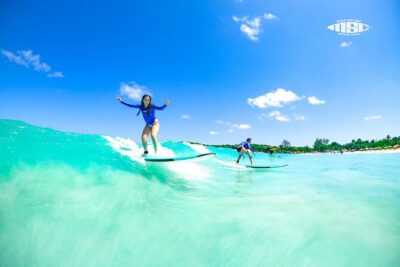 ★ 5.0Full-Day Surf Camp in Punta Cana –Lessons, Beach Time & AdventureFrom $20012 reviews
★ 4.6Chocolate Master Class & Taino concept StoreFrom $5712 reviews
★ 5.0Full-Day Surf Camp in Punta Cana –Lessons, Beach Time & AdventureFrom $20012 reviews
★ 4.6Chocolate Master Class & Taino concept StoreFrom $5712 reviews
 ★ 4.7‘Chillo al Coco’ Cooking Class & Taino Concept storeFrom $9810 reviews
Other lists for this tour